Festive Herb Roast Turkey
Festive Herb Roast Turkey
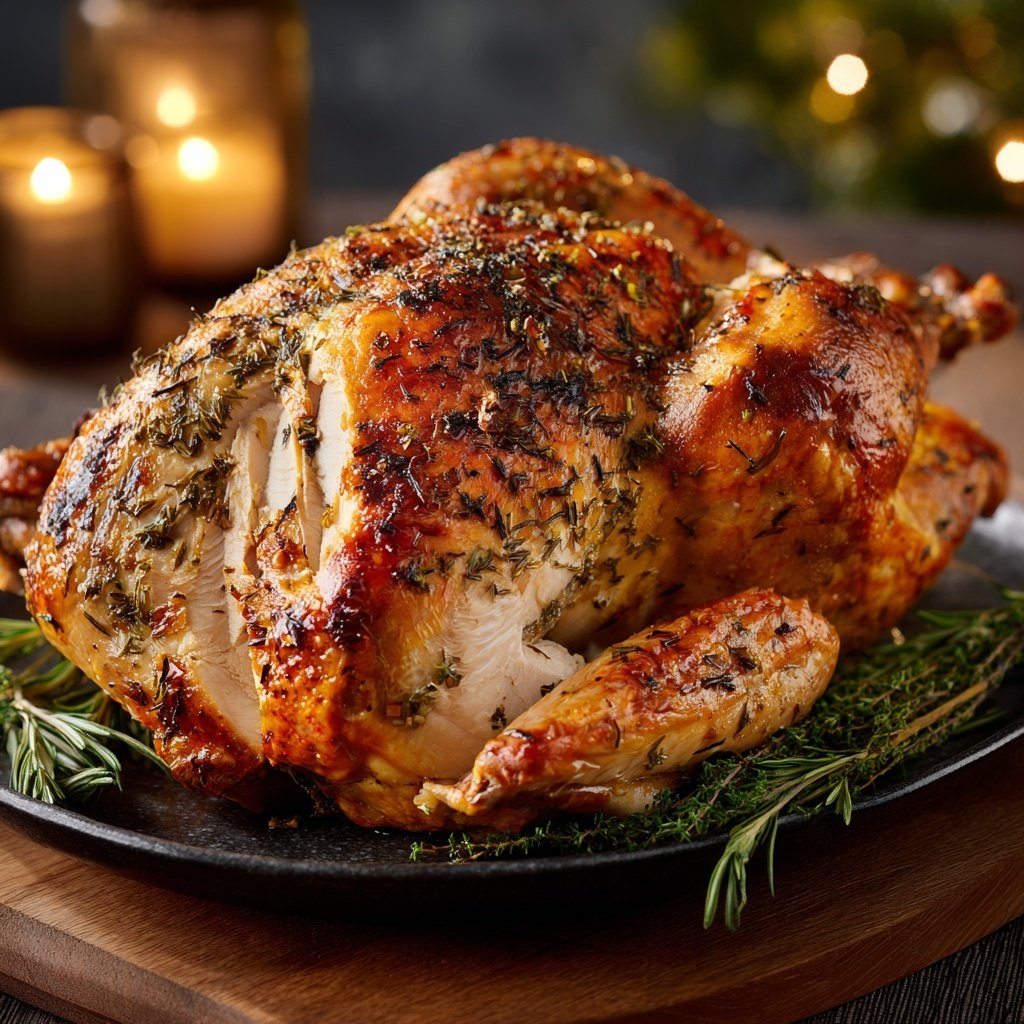
The Perfect Blend of Herbs
The secret to an unforgettable roast turkey lies in the herb blend used. A mix of fresh rosemary, thyme, and sage not only adds a classic flavor but also enhances the turkey's natural juiciness. As these herbs roast, their essential oils permeate the meat, resulting in a fragrant and delicious outcome. For an extra kick, consider adding lemon zest to the herb mix; its brightness complements the richness of the turkey beautifully.
When preparing your herb mixture, it's essential to chop the herbs finely to maximize their flavor release during cooking. This technique allows the herbs to evenly distribute across the turkey's surface, giving every bite a burst of flavor. A good rule of thumb is to use about one tablespoon of chopped herbs per pound of turkey for optimal seasoning.
Achieving Golden, Crispy Skin
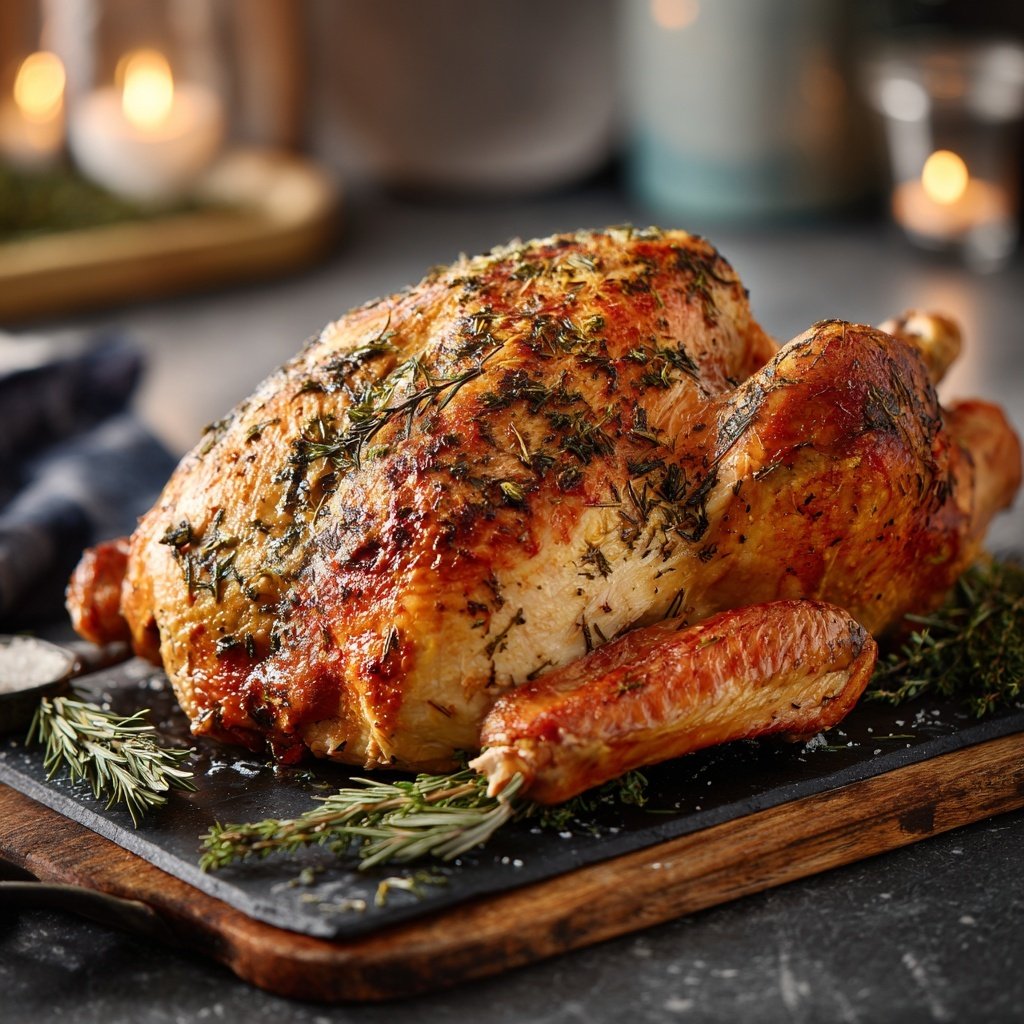
The skin of the turkey can make or break your cooking experience, and achieving a crispy, golden exterior is easier than you might think. Start by patting your turkey dry with paper towels, which will help the skin crisp up when roasted. An essential technique is to rub olive oil or melted butter all over the surface before roasting; this not only enhances browning but keeps the meat moist underneath.
Roasting at a higher temperature at the beginning of the cooking process—around 425°F (220°C) for the first 30 minutes—creates a great initial sizzle. Then, reduce the temperature to around 325°F (165°C) to finish cooking the turkey through. Keep an eye on the skin color, and if it starts to darken too quickly, tent it with foil to prevent burning.
Resting and Serving Your Turkey
Once your turkey has reached an internal temperature of 165°F (74°C) in the thickest part of the breast and legs, it's crucial to let it rest for at least 20-30 minutes before carving. Resting allows the juices to redistribute throughout the meat, ensuring every slice remains moist and tender. A handy tip is to cover the turkey loosely with foil to keep it warm while resting.
For an impressive presentation, carve the turkey at the table or on a large wooden cutting board. Arrange the pieces neatly and garnish with sprigs of the herbs used in the roast to echo the flavors. Serve alongside your favorite sides, such as savory stuffing or roasted vegetables, for a complete festive meal.
Make-Ahead Tips
Preparing for a big meal can be overwhelming, but there are ways to ease the process. You can prepare the herb blend and store it in an airtight container in the refrigerator up to a week in advance. This allows the flavors to meld and intensify over time, making your turkey even more flavorful when it's finally cooked.
Additionally, the turkey can be brined a day or two beforehand, which not only imparts flavor but also ensures a juicy outcome. Be sure to allow enough time for the turkey to thoroughly dry after brining to achieve that coveted crispy skin.
Leftover Storage and Reheating
Storing leftovers properly can extend the life of your Festive Herb Roast Turkey. Shred or slice any leftover turkey and place it in an airtight container; it can last for 3-4 days in the refrigerator. For longer storage, consider freezing the turkey in a vacuum-sealed bag, which can last up to six months while retaining its flavor and texture.
When it’s time to enjoy those leftovers, reheating is key. Place the turkey slices in a baking dish and add a splash of broth to prevent drying out. Cover with foil and heat in a preheated oven set to 325°F (165°C) until warmed through, roughly 20-25 minutes. This method helps maintain moisture, ensuring a delightful second outing for your turkey.
Flavor Variations
While the traditional mix of herbs is delightful, don't hesitate to experiment with flavors. For a Mediterranean twist, try adding olive tapenade or sun-dried tomatoes to the herb mix. This can create a unique depth of flavor that might surprise your guests and elevate your turkey beyond the classic recipe.
If you're looking for a spicy kick, incorporate crushed red pepper flakes or even a hint of smoked paprika to the mix. These additions can create a warm, aromatic background that beautifully complements the turkey's rich flavor while still embracing the spirit of the festive season.