Global Japanese Sushi Rolls
Highlighted under: Planet Food Recipes
I love making sushi at home, and this Global Japanese Sushi Rolls recipe has become a favorite in my kitchen. The combination of fresh ingredients and bold flavors never fails to impress my family and friends. I enjoy exploring the different fillings and toppings, which is what makes this sushi so versatile. Whether you prefer classic options or unique combinations, each roll is an adventure to create and eat. This recipe allows you to unleash your creativity while enjoying a delicious meal that’s perfect for any occasion.
When I first tried making sushi at home, I was amazed at how simple yet rewarding it is. One time, I invited friends over for a sushi night, and we crafted our rolls together, experimenting with different fillings like spicy tuna and avocado. It turned out to be a delightful experience filled with laughter and creativity.
I've learned that using quality ingredients really makes a difference, especially when it comes to the rice and seafood. I always opt for fresh fish from my local market and seasoned rice to achieve that authentic taste. A great tip is to keep your hands wet while rolling to prevent the rice from sticking.
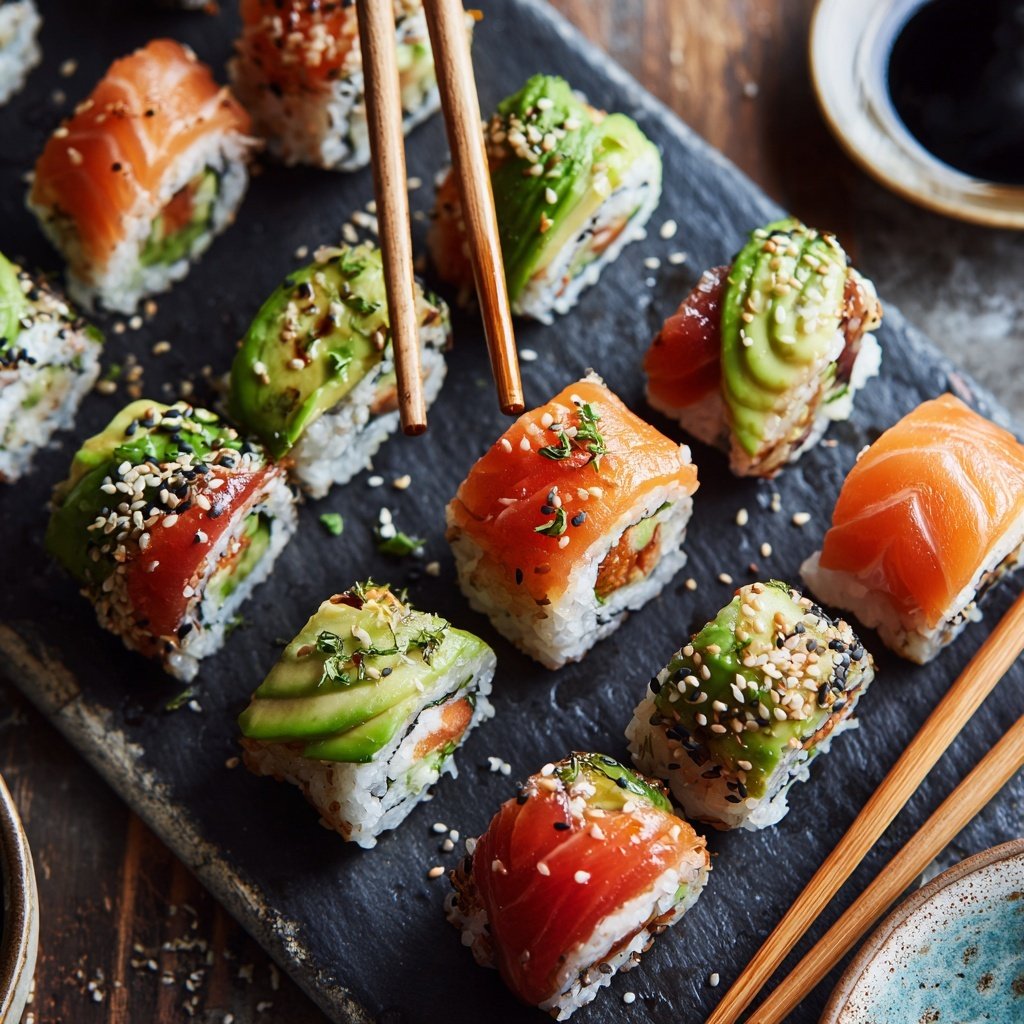
Why You'll Love This Recipe
- Endless filling and topping possibilities to suit every palate
- Fun and interactive way to enjoy a meal with friends or family
- Freshness of ingredients leads to a vibrant, healthy dish
The Art of Sushi Rice
The quality of sushi rice is paramount to an enjoyable sushi experience. Rinsing the rice until the water runs clear is crucial; this process removes excess starch, which can make the rice gummy. After cooking, allowing the rice to cool at room temperature is essential for achieving that perfect sticky texture, ideal for rolling. If it's too warm, the nori can wilt, and if too cold, it may not adhere well. Keep an eye on the texture: it should be glossy and slightly sticky without being clumpy.
Additionally, incorporating rice vinegar, sugar, and salt provides a balanced flavor, enhancing the overall taste of the sushi. The key is to mix these seasonings in a separate bowl until fully dissolved before folding them into the rice gently with a spatula. I recommend making the sushi rice a bit ahead of time to let the flavors meld. If necessary, sushi rice can be stored in an airtight container at room temperature for up to a few hours before use.
Choosing Fillings Wisely
When selecting fillings for your sushi rolls, freshness is everything. Opt for high-quality fish, preferably sashimi-grade, to ensure safety and optimal taste. If you're uncertain, a good rule of thumb is to spend a little extra on reputable sources or local fish markets. Aside from fish, feel free to get creative with vegetables; colorful ingredients not only add nutrition but also visual appeal. For instance, try adding thinly sliced radishes or bell peppers for extra crunch and a pop of color.
If you're looking for dietary substitutes, tempeh or even firm tofu works well as a protein substitute for a vegetarian take on sushi. Marinating the tofu with soy sauce adds depth to the flavor, mimicking the umami essence found in fish. Also, consider seasonal vegetables, like asparagus in spring, to keep your rolls vibrant and exciting throughout the year.
Mastering the Roll Technique
Rolling sushi can be daunting at first, but practice makes perfect. When laying the nori on the bamboo mat, ensure the shiny side is facing down, which helps in achieving that glossy finish after rolling. When spreading the sushi rice, avoid overpacking; a thin, even layer allows the ingredients to shine through without overwhelming the nori. Lay your fillings close together but not overcrowded, as this balance will make for a more cohesive roll. It's vital to roll firmly yet gently to prevent the nori from tearing.
After you've rolled the sushi, sealing the edge is just as important as the rolling technique. Moisten the top border of the nori with a little water using your fingers; this helps it stick without making it soggy. For a perfect slice, use a sharp knife and apply gentle pressure rather than sawing back and forth. A clean cut results in beautifully presented pieces, showing off the vibrant colors of your fillings.
Ingredients for Global Japanese Sushi Rolls
Sushi Rice
- 2 cups sushi rice
- 2 1/2 cups water
- 1/2 cup rice vinegar
- 2 tablespoons sugar
- 1 teaspoon salt
Fillings
- 4 sheets nori (seaweed)
- 1 ripe avocado, sliced
- 100g fresh tuna or salmon, sliced
- 1/2 cucumber, julienned
- 1/2 carrot, julienned
- Pickled ginger and wasabi for serving
Additional Ingredients (optional)
- Sesame seeds for garnish
- Chives for wrapping

How to Make Global Japanese Sushi Rolls
Prepare the Sushi Rice
Rinse the sushi rice under cold water until the water runs clear. Combine it with water in a rice cooker and cook according to the machine's instructions. Once done, allow steam to escape briefly, then transfer the rice to a bowl. Mix vinegar, sugar, and salt until dissolved, then fold it into the rice gently. Let it cool to room temperature.
Prepare the Fillings
Slice the avocado, fish, cucumber, and carrot into thin strips. Arrange them neatly on a plate for easy access.
Assemble the Sushi Rolls
Place a bamboo sushi mat on a flat surface. Lay a sheet of nori shiny side down, and spread a thin layer of sushi rice over it, leaving a 1-inch border at the top. Layer your chosen fillings horizontally across the rice. Using the sushi mat, roll it up tightly, pressing gently. Moisten the edge of the nori to seal the roll.
Slice and Serve
Using a sharp knife, slice the roll into bite-sized pieces, wiping the knife with a damp cloth between cuts to maintain clean edges. Arrange the pieces on a platter and serve with pickled ginger and wasabi on the side.
Enjoy Your Sushi Rolls!
Serve your sushi immediately for the best taste and texture.
Pro Tips
- Experiment with different fillings like cooked shrimp, tempura vegetables, or even fruits for a unique twist! Always ensure your fish is sushi-grade when using raw seafood.
Storage Tips
If you're planning to make sushi rolls in advance, store the completed rolls wrapped tightly in plastic wrap and refrigerate them. However, sushi is best enjoyed fresh. Ideally, consume your homemade sushi within a few hours of making it to maintain the integrity of the flavors and texture. If you have leftover sushi rice, it can also be refrigerated but should be consumed within a day or so to prevent spoilage.
Freezing sushi is not recommended, especially when it comes to fish, as it alters the texture significantly. However, you can freeze any prepped ingredients, such as sliced vegetables or leftover rice, separately. Just make sure to wrap them tightly to prevent freezer burn and maintain freshness.
Serving Suggestions
When serving your sushi rolls, arranging them on a platter can elevate the presentation. Consider garnishing with sesame seeds or thinly sliced green onions for added flavor and visual appeal. Don't forget to serve pickled ginger and wasabi on the side; these traditional accompaniments enhance the overall sushi experience with their contrasting flavors.
For a more interactive dining experience, consider setting up a sushi-making station. Prepare all your ingredients in advance, and let guests create their own rolls. This not only makes for a fun gathering but also allows everyone to personalize their sushi based on their taste. Prepare dipping sauces like soy sauce or spicy mayo to complement the rolls, adding an extra layer of flavor.
Questions About Recipes
→ Can I use brown rice instead of sushi rice?
Yes, but note that brown rice has a different texture and will require more water and cooking time.
→ What can I use if I don't have a sushi mat?
You can use a clean kitchen towel or a flat surface and roll carefully by hand.
→ How long can I store leftover sushi?
It's best to eat sushi fresh, but you can store it in the fridge for 24 hours. Just remember that the texture may change.
→ What are some good vegetarian filling options?
Try fillings like marinated tofu, grilled vegetables, or even sweet potato for a delicious vegetarian alternative.
Global Japanese Sushi Rolls
Created by: The Feliciabakes Team
Recipe Type: Planet Food Recipes
Skill Level: Intermediate
Final Quantity: 4 rolls
What You'll Need
Sushi Rice
- 2 cups sushi rice
- 2 1/2 cups water
- 1/2 cup rice vinegar
- 2 tablespoons sugar
- 1 teaspoon salt
Fillings
- 4 sheets nori (seaweed)
- 1 ripe avocado, sliced
- 100g fresh tuna or salmon, sliced
- 1/2 cucumber, julienned
- 1/2 carrot, julienned
- Pickled ginger and wasabi for serving
How-To Steps
Rinse the sushi rice under cold water until the water runs clear. Combine it with water in a rice cooker and cook according to the machine's instructions. Once done, allow steam to escape briefly, then transfer the rice to a bowl. Mix vinegar, sugar, and salt until dissolved, then fold it into the rice gently. Let it cool to room temperature.
Slice the avocado, fish, cucumber, and carrot into thin strips. Arrange them neatly on a plate for easy access.
Place a bamboo sushi mat on a flat surface. Lay a sheet of nori shiny side down, and spread a thin layer of sushi rice over it, leaving a 1-inch border at the top. Layer your chosen fillings horizontally across the rice. Using the sushi mat, roll it up tightly, pressing gently. Moisten the edge of the nori to seal the roll.
Using a sharp knife, slice the roll into bite-sized pieces, wiping the knife with a damp cloth between cuts to maintain clean edges. Arrange the pieces on a platter and serve with pickled ginger and wasabi on the side.
Extra Tips
- Experiment with different fillings like cooked shrimp, tempura vegetables, or even fruits for a unique twist! Always ensure your fish is sushi-grade when using raw seafood.
Nutritional Breakdown (Per Serving)
- Calories: 450 kcal
- Total Fat: 12g
- Saturated Fat: 2g
- Cholesterol: 30mg
- Sodium: 120mg
- Total Carbohydrates: 65g
- Dietary Fiber: 5g
- Sugars: 2g
- Protein: 10g